Agenda
Symposium
Thursday, March 26
Times in EDT
8:00 – 9:30 AM
9:30 – 9:40 AM

9:40 – 9:45 AM

9:45 – 10:00 AM

10:00 – 10:45 AM
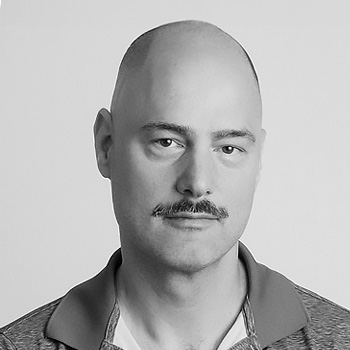
We seek to reclaim the term materialism—not as a symbol of empty consumerism, but as a meaningful practice: shaping our future through form and matter. For most of our history, life adapted to the material world around us. That changed the moment we discovered tools, technology, and architecture. With them, we gained the power to shape the material world in service of the life we wanted to lead. Human history can be read as a story told through materials—each breakthrough marking a new chapter in our evolution. We named entire eras after the substances we learned to mold: the Stone Age, the Bronze Age, the Iron Age, the Silicon Age. Our ability to manipulate matter has been one of the most powerful forces driving civilization forward. In this spirit, we invite you on a day long odyssey through the material world, as seen through the works of BIG and others — from the permanence of solid stone to finding new ways to lessen the carbon footprint of concrete to the regenerative and organic qualities of biophilia be prepared to understand the opportunities of all five facades through the lenses of MATERIALISM.

10:45 – 11:15 AM
11:15 AM – 12:00 PM
This session will explore cutting-edge building envelope products and services that are revolutionizing the AEC industry. These innovations enhance energy efficiency, durability, and sustainability while pushing the boundaries of design and performance. Experts will discuss how advancements in materials, fabrication techniques, and digital tools are enabling architects, engineers, and contractors to work smarter, build better, and achieve their design visions with greater precision.
Panelists will share their manufacturing expertise on technologies that contribute to meeting evolving building codes, improving occupant comfort, and reducing environmental impact, ultimately shaping the future of high-performance building envelopes.




12:00 – 12:45 PM





12:45 – 1:00 PM

1:00 – 2:00 PM
2:00 – 2:15 PM

2:15-3:00 PM







3:00-3:45 PM




3:45-4:15 PM
4:15-5:15 PM





5:15 PM


5:15 – 7:15 PM

Workshops
Friday, March 27
Times in EDT
Held in person at the New York Law School, participants will engage with the industry’s leading design professionals in an intimate, classroom-style setting. Select between four thematic tracks including: sustainability, detailing, materiality, and technology.
Choose the Tracks that most interest you and dive-deep into project typologies, technologies, and techniques to grow your knowledge and practice.
9:30 – 10:00 AM
TRACK A
Energy, Sustainability, and Resiliency
Combined with growing expectations for high performance, building enclosure design is now required to satisfy a large number of performance parameters that were not given a great deal of consideration in the past. Building enclosures were always expected to be durable and address issues like energy efficiency, daylighting, indoor air quality, fire safety, thermal comfort, and carbon footprint, but now with aggressive changes in code and the climate crisis the urgency to decarbonize our building envelopes and radically reduce operational carbon is every designers responsibility.
10:00 AM – 12:00 PM
In this workshop, participants will explore how architecture responds to climate by reimagining iconic buildings in new environmental contexts. Led by Rodrigo Borghino and Ricardo Díaz of Techne, this session invites architects, consultants, and engineers to analyze how changing a building’s location transforms its performance needs.
Through guided bioclimatic analysis, attendees will assess climate data, interpret thermal and solar variables, and redefine facade components to meet new contextual demands. By relocating buildings from New York, Los Angeles, and Monterrey, the exercise reveals how design intelligence adapts when architecture moves, and how a truly bioclimatic mindset drives technical specification, comfort, and sustainability.
Note: Please bring your laptop or tablet for the interactive portions of this session.




12:30 – 2:30 PM
Mass timber is often introduced into projects as an aspiration, driven by carbon reduction goals, biophilic spatial quality, and architectural expression. In practice, many mass timber projects evolve into hybrid structural systems due to cost volatility, supply-chain limitations, contractor familiarity, structural constraints, fire and vibration requirements, or local market conditions.
This session will examine candid case studies across a range of building typologies and structural systems, where mass timber was paired with steel, concrete, or or in combination with other wood systems in the final design. The workshop will include perspectives from architects, structural engineers, and mass timber specialists on the vision of each project, deep dives on the quintessential details, and reflections on how early engagement with manufacturers, engineers and builders can help teams anticipate, collaborate, and mitigate around constraints without losing architectural or carbon ambition. Attendees will leave with a productive design intelligence to apply to their next mass timber project and the confidence to pursue this structural system.






2:45 – 4:45 PM

TRACK B
In the Details: Facade Design, Engineering + Project Delivery
Clients demand attractive and high-performing buildings and as designers, you need to zoom in on fundamental design principles to achieve performance goals. This track will feature the opportunity to detail and collaborate on high-design, and high performance facades.
10:00 AM – 12:00 PM
TM Light will share their collaborative process behind a number of the Lighting Design firm’s projects such as Cartier Flagship in Miami’s Design District with Diller Scofidio and Renfro, ArtPark and Thaden School with Marlon Blackwell, the Texas State Capitol legislative chambers, and Prada’s temporary flagship facade with multidisciplinary studio 2×4.
The session will explore how the team conceives the illumination of facades in a manner that transforms throughout the day and night—shifting in material expression and luminosity over time. Participants will gain insight into how optical materials, custom fritting, and lighting design are choreographed to create dynamic facades through close collaboration between architects and lighting designers.



12:30 – 2:30 PM
This comprehensive workshop will provide an overview of load paths, jointing, and tolerances in exterior enclosures. The session will begin with a presentation on the basics of load paths, including how loads are transferred through a building structure. The presentation will also discuss the different types of joints used in exterior enclosures, as well as the factors, such as tolerances, that need to be considered when designing and detailing joints.
The second part of the workshop will be an interactive whiteboard exercise in which participants will work with the presenters to develop solutions to a handful of specific details. This exercise will give participants the opportunity to apply the concepts they learned in the lecture and to gain experience in working with tolerances and building movements. This workshop will be of particular interest for architects, engineers, contractors, and other professionals involved in the design, construction, or maintenance of exterior enclosures.
Learning Objectives:
- Understand the basics of load paths in exterior enclosures
- Identify the different types of joints used in exterior enclosures
- Understand the factors that need to be considered when designing and detailing joints
- Develop solutions to specific details that take into account load paths, tolerances, and building movements.






2:45 – 4:45 PM
TRACK C
Multimaterial Facades in Practice
Material selection not only impacts aesthetics but the delivery and performance of a building. These deep-diving case studies will discuss working with materials such as terra-cotta, mass timber, and more with lessons learned through real world case studies in both ground up and adaptive reuse scenarios.
10:00 AM – 12:00 PM
This workshop will explore how architecture and facade design shape both neighborhood identity and brand presence. At the Treadwell, design draws on a culturally contextual approach that merges the cool modernism of Midtown’s Art Deco towers with the warm, rusticated textures of the Upper East Side’s Romanesque residences. This blend results in a modernist yet contextual expression rooted in New York tradition.
The conversation will also dive into the practical realities of facade design—from cost, construction, and supply chain availability to material experimentation. We will explore the Treadwell’s use of fluted limestone-colored terracotta panels, paired with bronze bands in a layered composition that emphasizes both craft and verticality. In addition, the rigid bronze metal bands, which wrap around each floor provide a consistent facade design, allowed for the rainscreen cladding to be studied in from multiple materials, at different price points, and with consideration of supply chain availability.
Throughout the session, voices from development, marketing, construction, and manufacturing will offer multiple perspectives on how buildings communicate identity, place, and purpose.








12:30 – 2:30 PM




2:45 – 4:45 PM
Benefits to Covered
- Boost Biodiversity
- Facade Temperature Reduction
- Building Energy Load Reduction
- Deter Graffiti
- Trap Particulate Matter from the Air
- Improve Walkability
- Increase Mental Well Being


TRACK D
Technology: Research, Development, and Design Tools
Innovation is driving architecture and Advances in facade design, especially in the realm of digital design and advanced fabrication, are fundamentally changing how architects work. Notably, firms across the country are increasingly relying on in-house teams to develop custom software and play an integral role in the design-assist of facade components. Each team will presenting their methodologies and tools that are being implemented in real world projects.
10:00 AM – 12:00 PM
Other than in limited special cases, there is a lack of standards providing guidance on the design of structural glass in the United States, and across much of the world. This has resulted in an ad-hoc approach by cities (authorities having jurisdiction), architects, and engineers. In his recently published manual, engineer Richard Green outlines the key aspects of designing with glass in a manner that has reliability and robustness consistent with other structural materials, while also recognizing the unique aspects of glass.
Presented and discussed in this workshop, Green’s voluntary design manual is aimed at providing 4 consistent levels of risk in applications that allow Architects, Owners and Engineers to have an informed decision-making process for selecting levels of robustness, which may or may not be otherwise required by code. The document aims at developing consistent practices to facilitate confident design in glass while also addressing a number of technical challenges.





12:30 – 2:30 PM
With NYC’s adoption of the IECC 2024/ASHRAE 90.1-2022 energy standards, design professionals will be required to address thermal bridges with a new level of rigor. Elements that were once treated as secondary design considerations, such as steel penetrations, slab edges, and parapet connections, will now play a critical role in meeting the envelope performance standards prescribed by this next generation of energy codes. At the same time, many project teams may face uncertainty regarding topics such as compliance paths, material selection, product selection, structural design, constructibility, and fire resistance. This workshop aims to bridge those gaps by providing a multidisciplinary, hands-on exploration of structural thermal breaks and the new requirements governing them.
The session will begin with an overview of the fundamentals of thermal bridging, illustrating how seemingly “small” details can have a disproportionate impact on envelope thermal performance. Speakers will then explain how new energy codes define and regulate these conditions, including documentation requirements on project drawings.
Next, the session will address structural considerations for thermal-break design, including product limitations, load paths, and delegated design coordination. Finally, the workshop will cover key compliance issues related to combustible thermal-break materials, summarizing the implications of NFPA 285, concealed space protection, and material flammability requirements, with guidance on integrating thermal breaks without compromising code compliance or fire performance.
If you’re an architect, engineer, contractor, developer, or other facade-related professional, join us for a hands-on workshop demystifying new thermal-bridging requirements and the real-world impact of structural thermal breaks, equipping teams to design efficient, code-compliant, and structurally sound envelope systems.








2:45-4:45 PM


