Agenda
Symposium
Wednesday, February 25
Times in EST
8:00 – 9:30 AM
9:30 – 9:40 AM




9:45 – 10:30 AM
In this session, leaders at HOK will explore how innovative applications of proven facade systems deliver measurable performance improvements across diverse building types.
The panel will describe three recent HOK projects that demonstrate this approach:
- A new corporate campus in the Atlanta area, where high-performance envelope design achieved ambitious predicted energy use intensity (PEUI) and energy efficiency targets.
- Clemson University’s Advanced Materials Innovation Center, where prefabricated wall assemblies accelerated construction while optimizing performance.
- Emory University’s award-winning Health Sciences Research Building (HSRB-II), which relied on intensive collaboration between architects and engineers to create a specialized atrium facade that balances makeup-air requirements with glazing performance.
These case studies show how thoughtful detailing, rigorous technical alignment, and strategic use of established facade materials advance the industry’s push toward higher-performing buildings.







10:30 – 11:00 AM
In this session, attendees will learn about the advanced building envelope technologies transforming the AEC industry. These advancements allow designers, engineers, and contractors to embrace renewable energy and sustainable building solutions.
Moderated by: Ralph Raymond




11:00 – 11:30 AM
11:30 – 12:15 PM
This session will explore Science Square, Georgia Tech’s transformative 18-acre mixed-use life science district developed with Trammell Crow Company on the southwestern edge of campus. At its core is Science Square Labs, a 13-story, purpose-built research tower designed from the inside out to support cleanrooms, wet labs, and vibration-sensitive equipment through enhanced structural rigidity, advanced mechanical and electrical systems, network power, and three backup generators. The building’s high-performance facade uses electrochromic glazing to manage heat gain and block UV rays while preserving clear views of the Atlanta skyline, complemented by 100% fresh air delivery through more than four miles of rooftop piping, two dedicated freight elevators, and solar panels on the parking deck. Designed to meet LEED Gold, Science Square Labs reflects how infrastructure and envelope innovation can shape a next-generation life sciences hub and strengthen connections between Georgia Tech, the city, and surrounding communities.
Moderated by: Alan Stevenson






12:15 – 12:45 PM
In this panel, attendees will explore cutting-edge building envelope products and services that are revolutionizing the AEC industry. These innovations enhance energy efficiency, durability, and sustainability while pushing the boundaries of design and performance. Experts will discuss how advancements in materials, fabrication techniques, and digital tools are enabling architects, engineers, and contractors to work smarter, build better, and achieve their design visions with greater precision. These panelists will share their manufacturing expertise on technologies that contribute to meeting evolving building codes, improving occupant comfort, and reducing environmental impact, ultimately shaping the future of high-performance building envelopes.
Moderated by: Alan Stevenson





12:45 – 1:45 PM
1:45 – 2:30 PM
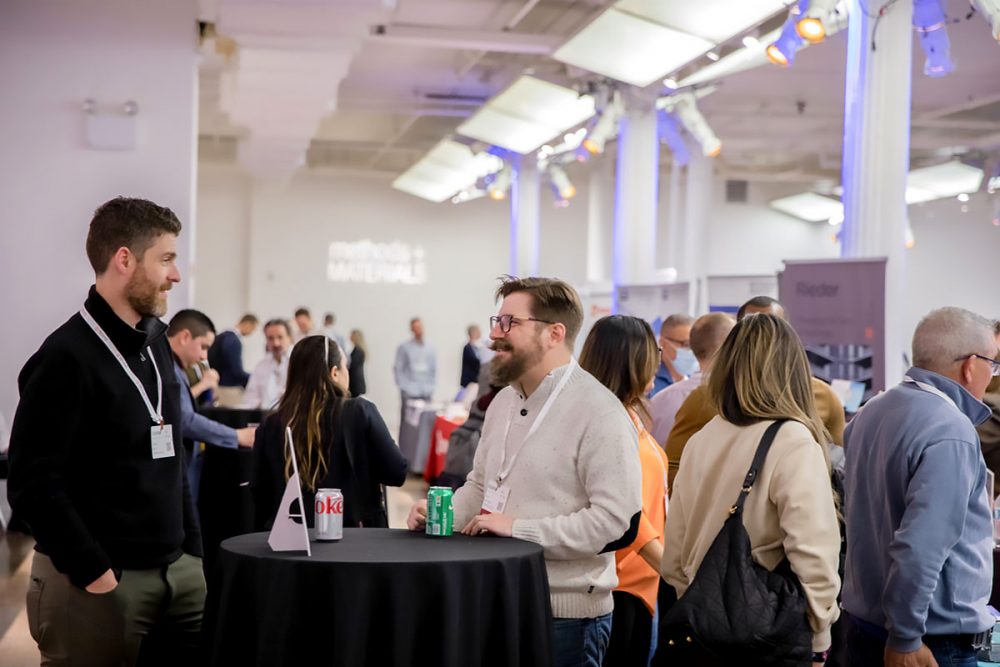
Table Talks is an opportunity to have a guided conversation with your peers in the Atlanta AEC community. During this 45-minute session, fellow attendees offer an excellent opportunity for networking, exchanging insights on facades, and collaboratively tackling complex challenges within a group dynamic. We hope this session will be surprising, engaging, and productive.
2:30 – 3:15 PM
Branch Technology founder Platt Boyd and ICON Director and Principal Architect Simon Arnold will each present potentials and applications of large-scale 3D-printed facades, houses, and structures. These back-to-back presentations will address design and fabrication processes, focusing on aesthetic testing, cost efficiency, and built outcomes. This in-depth session will conclude with a moderated discussion and audience Q&A.
Moderated by: Alan Stevenson




3:15 – 3:45 PM
3:45 – 4:15 PM
This session will explore the facade design of the Mary Schmidt Campbell Center for Innovation & the Arts at Spelman College, a new gateway to campus designed by Studio Gang. The building pairs a brick base—rooted in Spelman’s architectural heritage and Atlanta’s red-clay palette—with a lighter upper volume clad in flat metal panels and wrapped in patterned sunshades. These shading elements are key to the building’s passive design strategy, tuned for daylight modulation, glare control, and reduced heat gain while maintaining visual openness. The recessed ground level and outdoor terraces extend this passive approach, creating shaded “porch” spaces that connect the college to its surrounding neighborhood. Speakers from Studio Gang and Thornton Tomasetti will discuss how shading performance, environmental responsiveness, and civic presence come together in this distinct building envelope.
Moderated by: Ralph Raymond



4:15 – 5:00 PM
Mass and Hybrid Timber Systems have rapidly become part of the design lexicon of architects and highly in-demand from clients across structure, superstructure, facades, and enclosure. Join three leaders in Mass Timber design & engineering to discuss best practices, unique benefits, lessons in design and construction, the growth of regional material supply chains for timber, and the future of timber design for enclosures.
Moderated by: Francesca Oliveira






5:00 – 5:05 PM

5:05 – 7:00 PM

Save Your Seat Today!
Join us at Facades+ Atlanta for peer-learning and networking opportunities to keep you at the forefront of your design practice.

EARN 6 AIA HSW CREDITS


